Over 70,000 used vehicles entered Georgia in 2024, according to Geostat data cited by Lion Auto. Many buyers source them from U.S. auctions while wholesale prices remain firm in 2026.
That demand creates a problem. Auction listings reward speed, not careful selection. One “cheap” sedan can turn expensive after customs, parts sourcing, and repairs.
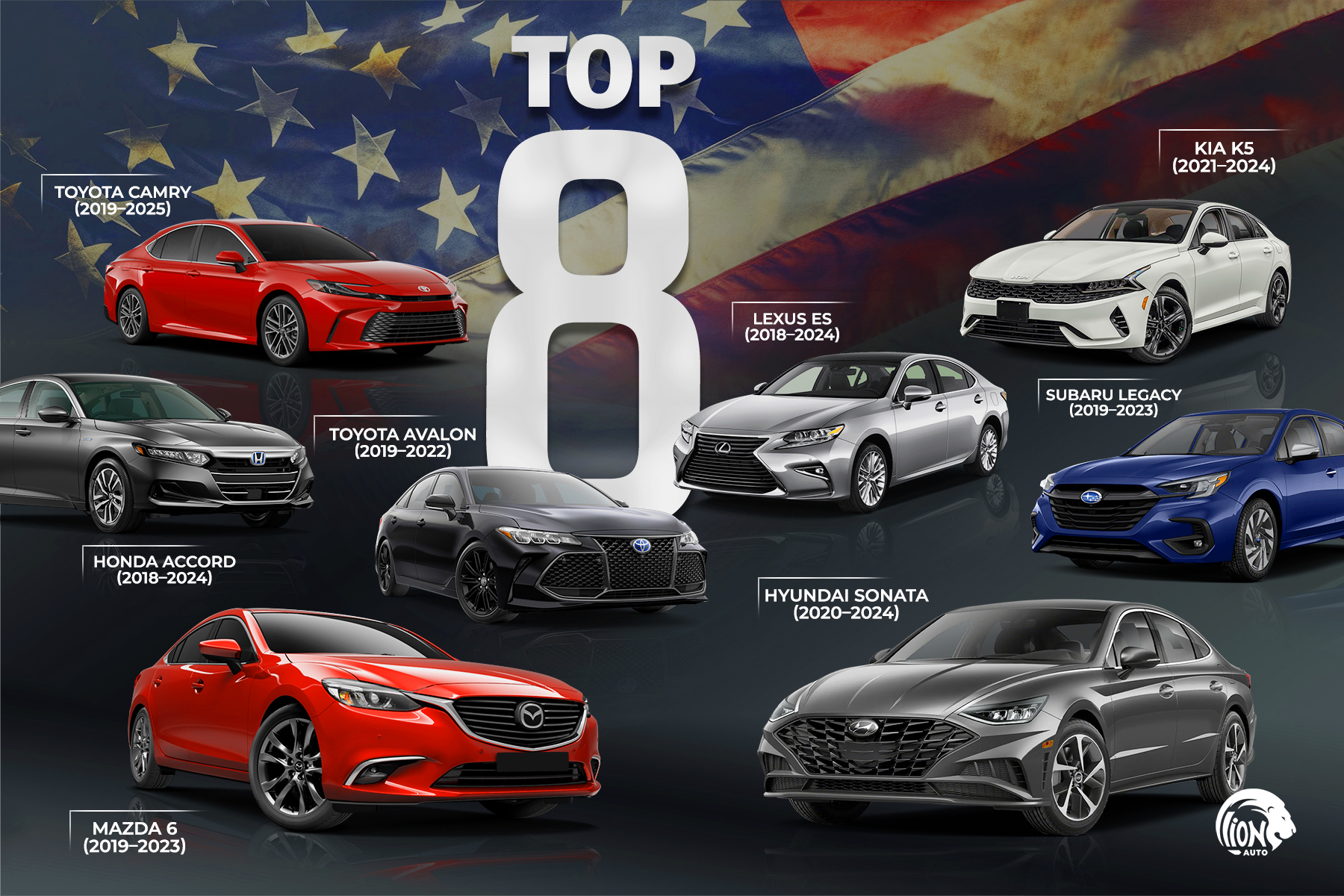
Top 8 Best Sedans to Buy from the USA in 2026 solves that gap with a clear, import-focused ranking.
How We Ranked the Best Sedans for 2026 Imports
A ranked list without criteria means nothing. Buyers importing from U.S. auctions face real financial risk, so selection must rely on data, not opinion.
Each sedan below passed a strict multi-factor evaluation focused on long-term ownership outside the United States. The goal wasn’t to find the flashiest model. The goal was to identify sedans that remain financially sensible after shipping, customs, and years of use.
Below is the exact framework used.
1. Long-Term Reliability History
Short warranty periods tell very little about real durability. Rankings focused on models with proven performance beyond 150,000–250,000 km.
Evaluation sources included:
- Multi-year ownership reports
- Known engine lifespan patterns
- Recurring mechanical complaints across generations
Sedans with consistent reliability across several production years ranked higher than models with strong first-year results but declining durability later.
2. Engine & Transmission Durability
Powertrain failure creates the largest ownership expense after import.
Assessment focused on:
- Naturally aspirated vs turbocharged reliability trends
- CVT longevity vs traditional automatic gearboxes
- Hybrid system track records
- Frequency of oil consumption or transmission failures
Models with proven 2.5L naturally aspirated engines and conventional automatics generally scored stronger than small turbo engines under long-term stress.
3. Availability of Parts Outside the U.S.
Import buyers must think beyond the auction price.
Vehicles ranked higher if:
- Spare parts are widely available in Georgia and nearby markets
- Aftermarket components exist at reasonable prices
- Service knowledge is common among local mechanics
Rare trims or low-volume engines reduced ranking scores due to sourcing difficulty.
4. Maintenance & Repair Costs
Affordable servicing protects resale value.
Evaluation included:
- Average annual maintenance cost trends
- Common repair frequency
- Cost of suspension, braking, and electrical components
- Complexity of engine bay layout
Sedans with simple mechanical layouts and lower parts pricing scored higher.
5. Fuel Efficiency in Real Driving Conditions
Auction listings often show optimistic MPG numbers. Rankings relied on real-world consumption reports rather than manufacturer claims.
Higher priority went to:
- Balanced fuel economy with sufficient power
- Hybrid systems with proven battery longevity
- Engines that run efficiently on standard fuel grades
Excessive turbo boost dependency reduced ranking points due to higher fuel and maintenance costs
6. Resale Value After Import
Strong resale demand in Georgia and neighboring markets mattered.
Evaluation considered:
- Historical resale performance
- Brand reputation locally
- Buyer perception of reliability
- Demand consistency across model years
Sedans that maintain price stability after 2–4 years ranked higher.
7. Suitability for U.S. Auctions
Import success depends heavily on auction availability and damage patterns.
Vehicles scored well if:
- Commonly listed on Copart, IAAI, Manheim, and dealer inventory
- Frequently available with clean titles
- Often show light cosmetic or repairable damage
- Have strong parts availability for restoration
Limited auction supply reduced ranking potential regardless of reliability.
8. Known Problem Years to Avoid
Every model has weak production years.
Scoring adjusted based on:
- Engine redesign years
- First-generation transmission issues
- Known recall-heavy production runs
- Costly design flaws that affect imported units
Only production years with stable reliability records were included in final recommendations.
Top 8 Best Sedans to Buy from the USA in 2026 (Ranked)
Ranking criteria only matters if it translates into real ownership outcomes. Each pick below balances durability, running costs, parts access, auction availability, and resale strength in Georgia. Every model follows the same format, so comparisons stay simple.
#1 Toyota Camry (2019–2025)
Why Camry ranks first
Camry keeps winning on predictable ownership. Buyers rarely face surprise powertrain bills. Auction supply stays strong, so pricing remains competitive.
Engine options worth importing
Most import buyers should stick with the 2.5L. It stays simpler and cheaper to service.
Hybrid fits high-mileage city driving. It makes sense when battery health checks out.
Reliability track record
Camry’s reputation comes from boring consistency. Owners usually deal with minor wear items, not major failures.
Fuel consumption expectations
2.5L works well for mixed driving and highway use. Hybrid cuts fuel spend most in stop-and-go traffic.
Typical issues to watch
Expect routine suspension wear and brake servicing over time.
Avoid cars with neglected oil-change history.
Resale after import
Camry resells fast in Georgia. Buyers trust the model, even with higher mileage.
Best for
Families, daily commuting, taxi-style business use, and anyone who wants low drama.
#2 Honda Accord (2018–2024)
Why Accord ranks second
Accord adds cabin space and highway comfort without turning into a maintenance trap. Many trims offer strong value at auction.
Engine options worth importing
Choose the 2.0T when available. It usually ages better under load.
Treat the 1.5T carefully. Prioritize clean service records and conservative driving history.
Interior and comfort advantage
The accord feels roomy in both rows. Long drives stay less tiring than many rivals.
Reliability strengths and weak points
Most owners report stable long-term use. Risk climbs with neglected turbo maintenance.
Ownership cost vs Camry
Accord can cost slightly more long-term, depending on engine choice. Camry stays cheaper on average.
Resale after import
Resale remains strong, especially for clean-looking trims with a transparent history.
Best for
Drivers who want space, comfort, and a sharper road feel than Camry.
#3 Lexus ES (2018–2024)
Why Lexus ES ranks third
ES brings quiet comfort and premium cabin quality without premium-level repairs. Buyers get “luxury feel” with Toyota-level dependability.
Engine and drivability
Power delivery feels smooth and predictable. Routine servicing stays straightforward for the class.
Interior quality vs German sedans
Materials age well and cabin noise stays low. Owners usually avoid constant sensor and suspension headaches.
Maintenance cost comparison vs BMW/Audi
Parts and labor often cost less than German premium sedans. Fewer complicated failures show up over time.
Auction suitability
Clean-title listings appear often. Many come from lease returns or older private owners.
Fuel consumption expectations
Fuel use won’t beat a hybrid, but it stays reasonable for a premium sedan.
Resale after import
ES holds value well because buyers want comfort without risk.
Best for
Buyers who want a premium cabin, quiet rides, and predictable maintenance.
#4 Toyota Avalon (2019–2022)
Why Avalon ranks fourth
Avalon offers near-Lexus comfort at a Toyota service level. Auction prices often lag behind what buyers expect locally.
Comfort and cabin size
Rear-seat space feels generous. Ride quality favors calm over sportiness.
Engine reliability
Powertrain reliability stays strong when maintenance history looks clean.
Why Avalon gets undervalued at auction
Many buyers chase SUVs, so large sedans get less bidding pressure. That creates import opportunities.
Fuel consumption expectations
Fuel use trends are higher than Camry. Highway driving narrows the gap.
Resale after import
Resale depends on buyer taste, but demand remains steady among comfort-first shoppers.
Best for
Long-distance drivers, comfort-focused owners, and anyone wanting a “big sedan” feel.
#5 Mazda 6 (2019–2023)
Why Mazda 6 ranks fifth
Mazda 6 feels more driver-focused than most mainstream sedans. It also delivers an upscale interior for the money.
Driving dynamics vs Toyota/Honda
Steering and chassis tuning feel sharper. Daily driving stays more engaging.
Interior quality surprise factor
Cabin materials often feel closer to entry luxury than economy class.
Reliability improvements
Recent model years show solid day-to-day durability when owners follow basic maintenance.
Parts availability considerations
Parts access can vary by trim and market. Common trims remain easier to support.
Fuel consumption expectations
Fuel use stays competitive for the segment, depending on engine choice and driving style.
Resale after import
Resales can run slightly slower than Toyota and Honda. Pricing still holds when condition looks excellent.
Best for
Drivers who value handling and interior feel, and don’t mind slightly narrower resale demand.
#6 Hyundai Sonata (2020–2024)
Why Sonata ranks sixth
Sonata often sells for less at auction while offering modern tech and strong safety packages. Buyers must choose the right engine and year.
Design, tech, and safety
Many trims include driver-assist features that matter in daily traffic. Cabin design feels modern without being complicated.
Reliability direction in newer models
Newer years generally show better consistency than older generations. Service history still matters more than mileage alone.
Engine options to choose vs avoid
Prioritize trims with a clean long-term reputation and documented maintenance.
Avoid unknown-history cars with performance tuning signs.
Warranty considerations
Factory warranties rarely transfer cleanly across borders. Buyer perception still favors Hyundai’s warranty reputation.
Why Sonatas run cheaper at auction
High supply and lower brand bidding pressure push prices down. That helps import budgets.
Resale after import
Resale works best with popular trims and clean cosmetics.
Best for
Budget-focused buyers who want modern features and plan to check history carefully.
#7 Kia K5 (2021–2024)
Why K5 ranks seventh
K5 targets buyers who care about design and tech. Auction pricing often stays attractive versus what it looks like on the road.
Interior tech and design strengths
The cabin layout feels current. Many trims offer strong infotainment and driver aids.
Driving comfort and fuel efficiency
Ride quality suits daily commuting. Fuel spend stays manageable for the size.
Reliability expectations
Long-term expectations look solid for recent years, but the track record remains shorter than Camry or Accord.
Comparison with Hyundai Sonata
K5 and Sonata share many fundamentals. K5 often feels sportier in styling and cabin design.
Resale after import
Resale depends on trim and styling preferences, but demand exists among younger buyers.
Best for
Tech-forward buyers who want a modern look and don’t need the longest reliability history.
#8 Subaru Legacy (2019–2023)
Why Legacy ranks eighth
Legacy earns its spot for one reason: AWD. Buyers in snow, mountain roads, or rural areas value traction enough to accept trade-offs.
AWD reliability and use cases
AWD helps in slippery conditions and uneven roads. It also adds complexity and service needs.
Engine and CVT considerations
CVT condition matters more than mileage. Test drive behavior and fluid condition checks carry weight.
Fuel consumption trade-offs
AWD usually costs more fuel than FWD rivals. City driving shows the biggest difference.
Maintenance after import
Plan for more frequent drivetrain-related servicing. Choose cars with clean, consistent maintenance records.
Resale after import
Resale stays strongest in regions where AWD feels necessary, not optional.
Best for
Buyers who actually need AWD. City-only drivers usually get better value elsewhere.
Quick comparison for import buyers
| Model (Years) | Strongest reason to import | Powertrain choice that usually makes sense | Resale speed in Georgia | Buyer profile |
| Toyota Camry (2019–2025) | Predictable ownership | 2.5L or Hybrid (verified health) | Fast | Families, daily drivers, business use |
| Honda Accord (2018–2024) | Space + comfort | Prefer 2.0T; verify 1.5T history | Fast | Highway drivers, larger cabin needs |
| Lexus ES (2018–2024) | Premium comfort, low risk | Stable, smooth long-term setup | Fast | Luxury feel without luxury repairs |
| Toyota Avalon (2019–2022) | Big-sedan comfort value | Strong reliability with clean history | Medium-fast | Long-distance comfort seekers |
| Mazda 6 (2019–2023) | Driver-focused feel | Choose common trims for parts access | Medium | Drivers who care about handling |
| Hyundai Sonata (2020–2024) | Features for lower auction price | Choose proven trims with history | Medium | Budget buyers who still want tech |
| Kia K5 (2021–2024) | Modern design + tech | Recent years with documented care | Medium | Younger, tech-forward buyers |
| Subaru Legacy (2019–2023) | AWD practicality | CVT condition verified | Medium | Buyers who truly need AWD |
Sedans to Avoid Importing from the USA in 2026
Auction photos can look perfect, even when ownership turns into a money pit. A low bid price often hides the real cost in parts, labor, diagnostics, and downtime. Use the red flags below to screen listings before anyone bids.
Quick filter: the patterns that usually backfire
| Red flag pattern | Why it turns expensive after import | What to check before bidding |
| Chronic reliability complaints across multiple model years | Repeat failures don’t disappear with one repair | Owner reports, recall history, common failure threads by year |
| Weak transmissions in heavy city use | Gearbox work often costs more than expected locally | Transmission type, service records, test-drive notes (when available) |
| Small turbo engines with neglected maintenance | Turbo, cooling, and oil issues stack quickly | Oil-change intervals, coolant history, signs of overheating |
| Complicated electronics after front-end damage | Sensor and wiring troubleshooting eats time and money | Airbag deployment, ADAS sensor alignment needs, wiring damage notes |
| “Cheap luxury” sedans with high parts prices | Premium parts and specialist labor erase auction savings | Local parts availability, diagnostic capability, suspension complexity |
| Title and damage types that raise hidden risk | Flood and structural issues keep resurfacing | Title type, damage description, inspection photos, underbody shots |
1) Sedans with poor long-term reliability signals
Avoid models with the same major complaint repeating year after year. Powertrain patterns matter more than brand reputation.
Watch for:
- Frequent engine oil consumption reports
- Repeated cooling system failures
- Chronic electrical faults that trigger warning lights
A single owner complaint means little. A pattern across many owners usually predicts future costs.
2) Sedans with problematic transmissions or engines
Transmission risk ruins import math faster than anything else. A “smooth drive” description in an auction listing won’t protect you.
Common risk patterns:
Older or stressed CVTs
CVTs can work fine, but weak designs don’t age well under traffic and heat. Repairs often require specialist work.
Small turbo engines with hard life histories
Turbo engines punish skipped oil changes. They also react badly to overheating events.
Direct-injection engines with heavy city mileage
Carbon buildup can become a recurring expense. Repairs might repeat if driving conditions stay the same.
3) Cars that look cheap at auction but cost more to own
Some sedans stay cheap for a reason. The bid looks attractive, then the post-arrival checklist becomes endless.
High-risk “cheap” traps:
Front-end hits on modern cars
Radar sensors, cameras, headlights, and brackets add up quickly. Calibration costs get overlooked.
Airbag deployment
Airbag replacement often pulls in modules, seatbelts, sensors, and programming work.
Flood exposure or water intrusion
Electrical problems can appear months later. Resale value also drops sharply.
Structural damage
Alignment, tire wear, and vibration issues can linger after repair.
4) Why certain European sedans often don’t make sense
European premium sedans can feel like bargains in U.S. auctions. Ownership outside the U.S. often flips the equation.
Typical pain points:
- Expensive suspension components and frequent wear items
- Specialized diagnostics and coding requirements
- Longer downtime while waiting for specific parts
- Higher labor cost due to complexity
Importing one can still work, but only with a clear parts plan and a realistic repair budget.
A practical “avoid” checklist for fast decisions
A listing deserves extra caution when it stacks multiple risk signals:
- Weak powertrain reputation for that exact year
- Airbags deployed plus modern driver-assist sensors involved
- Flood indicators, water lines, or interior mold hints
- Structural damage or unclear repair history
- Limited parts access in Georgia for the trim or engine
A safe import rarely looks like the cheapest option on the first scroll. It usually looks like the cleanest history with the fewest unknowns.
Which Sedan Should You Buy from the USA in 2026?
Rankings help narrow the field. Your final pick should match how you drive, how long you’ll keep the car, and how much risk you’ll tolerate after import. Use the buyer-type guide below to choose fast, without overthinking.
Choose based on your ownership style
| Buyer type | Best match | Why it fits | What to watch before bidding |
| Want the safest all-around import | Toyota Camry (2019–2025) | Predictable upkeep, strong resale, easy parts access | Service history consistency, prior ride-share use, cosmetic vs structural damage |
| Prefer space and strong highway comfort | Honda Accord (2018–2024) | Big cabin, stable ride, strong value when you pick the right engine | Favor 2.0T when possible, verify maintenance discipline on 1.5T |
| Want luxury feel without luxury repairs | Lexus ES (2018–2024) | Quiet cabin, premium finish, usually fewer costly surprises than European options | Check for clean title, confirm accident scope, verify scheduled servicing |
| Want a larger, comfort-first sedan | Toyota Avalon (2019–2022) | Big-sedan calm ride, often priced lower than expected at auction | Higher fuel use than Camry, look for clean maintenance habits |
| Care about driving feel and interior quality | Mazda 6 (2019–2023) | Sharper steering, upscale cabin, solid durability in recent years | Parts access by trim, avoid neglected cars with uneven tire wear |
| Want features for less money | Hyundai Sonata (2020–2024) | Modern tech, strong safety packages, often cheaper in U.S. auctions | Pick proven trims, avoid unknown engine histories, inspect damage type carefully |
| Want a modern look with strong tech | Kia K5 (2021–2024) | Attractive design, good daily comfort, competitive running costs | Track record shorter than Toyota/Honda, choose clean-history examples |
| Need AWD for real conditions | Subaru Legacy (2019–2023) | AWD traction suits snow, hills, rougher roads | CVT condition matters, fuel use runs higher, maintenance discipline matters |
A simple decision framework that prevents expensive mistakes
Pick your sedan using four checks. They keep the decision grounded in import reality, not emotions.
- Start with your use case
Daily city driving, long highway trips, family hauling, or mountain roads will push you toward different choices. - Choose the safest powertrain, not the most exciting trim
A proven engine and gearbox beats extra horsepower when repairs happen far from the U.S. - Treat damage type like a budget multiplier
Cosmetic issues stay manageable. Airbags, water exposure, and structural hits rarely stay “cheap.” - Think about resale before you buy
If you plan to sell in 2–3 years, pick the models buyers trust most locally.
Quick picks if you want the short answer
- Best overall sedan: Toyota Camry (2019–2025)
- Best luxury sedan without luxury problems: Lexus ES (2018–2024)
- Best budget-friendly sedan: Hyundai Sonata (2020–2024)
- Best AWD sedan: Subaru Legacy (2019–2023)
A smart import doesn’t start with the lowest bid. It starts with the cleanest history, the simplest mechanical risk, and a resale market that stays strong after the car lands.