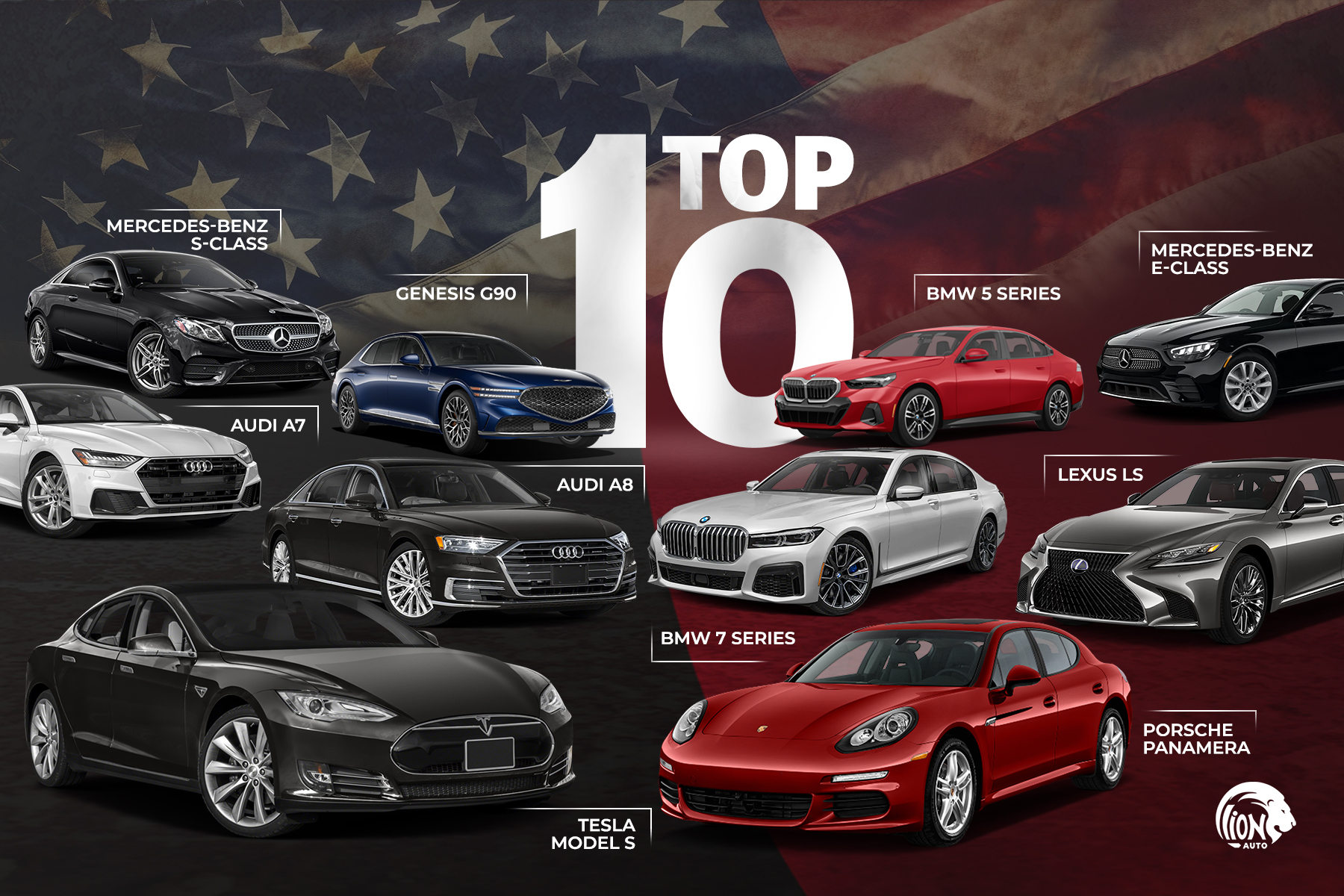
In December 2025, the average new-car price in the U.S. hit $50,326, pushing more buyers to compare value more aggressively. Luxury brands also held 12.54% of the U.S. market in 2025, so choices keep widening rather than narrowing.
That variety creates a problem: two cars can cost similar money and feel totally different every day. Some win on cabin calm. Others win on powertrain polish, tech usability, or long-term running costs. This guide ranks the top 10 luxury cars using clear criteria and a weighted scoring model, so you can match the list to how you actually drive and live.
How We Ranked the Top 10 Luxury Cars
Luxury buyers rarely want “fast” or “pretty” as the only answer. They want a car that feels right every day, stays quiet under stress, and holds value. The ranking below follows buyer-centric criteria, then turns each category into a transparent score.
Ranking criteria explained
Interior quality & comfort
Luxury starts where you touch and sit. Material quality, seat support, rear-seat comfort, and climate control shape daily ownership. A cabin can look premium in photos and still feel cheap in person. The scoring rewards cars that feel solid, calm, and well-finished on real roads.
Ride quality & noise isolation
A luxury car should reduce fatigue. Suspension tuning, body control, wind noise, road noise, and vibration matter more than many shoppers expect. Long drives expose weak damping and poor insulation fast. Higher scores go to cars that stay composed on rough pavement.
Performance & powertrain options
Speed alone doesn’t win. Power delivery, smoothness, transmission logic, steering feel, braking confidence, and available powertrain choices all matter. Luxury buyers also care about refinement at low speeds. The ranking favors cars that blend strong performance with effortless drivability.
Technology & infotainment
Tech should remove friction, not add it. Screen clarity, menu logic, voice control, phone integration, and driver-assist behavior affect every trip. Systems that distract or bury basic controls lose points. The scoring rewards usable interfaces and well-calibrated assistance features.
Reliability & ownership costs
Luxury ownership can turn expensive quickly. Maintenance frequency, parts pricing, service network strength, warranty coverage, and repair risk define the real cost. Depreciation also hits ownership cost hard. Higher scores go to cars with stronger long-term expectations, not hype.
Brand prestige & resale value
Prestige still influences luxury decisions. Image, dealer experience, and perceived status shape the buying moment. Resale value shapes the exit. The ranking rewards brands and models that keep demand strong, without overpaying for a badge alone.
Scoring system overview
Each car receives a 0–10 score in every category. The final rank comes from a weighted total, built to match common luxury-buyer priorities.
| Category | Weight |
|---|---|
| Interior quality & comfort | 25% |
| Ride quality & noise isolation | 20% |
| Performance & powertrain options | 20% |
| Technology & infotainment | 15% |
| Reliability & ownership costs | 15% |
| Brand prestige & resale value | 5% |
How the final score gets calculated
Weighted Score = (Interior × 0.25) + (Ride × 0.20) + (Performance × 0.20) + (Tech × 0.15) + (Ownership × 0.15) + (Resale × 0.05)
The weights keep the list buyer-led. Comfort, ride, and powertrain quality drive most of the result. Tech and ownership costs shape the long-term experience. Prestige matters, but it won’t carry a weaker car into the top spots.
Top 10 Luxury Cars Ranked
The table below gives you a fast, side-by-side view of the top contenders.
You’ll see where each model stands before diving into detailed breakdowns.
Prices reflect estimated 2026 starting MSRP in the U.S. market.
| Rank | Model | Starting Price (USD) | Best For | Key Strength | One Limitation |
| 1 | Mercedes-Benz S-Class | $118,000 | Ultimate comfort & prestige | Class-leading cabin refinement | High long-term maintenance costs |
| 2 | BMW 7 Series | $97,000 | Tech-focused luxury buyers | Advanced infotainment and rear-seat tech | Exterior design divides opinion |
| 3 | Audi A8 | $90,000 | Balanced executive sedan | Smooth ride with subtle styling | Less engaging driving feel |
| 4 | Lexus LS | $81,000 | Long-term reliability | Strong reliability reputation | Infotainment feels dated |
| 5 | Porsche Panamera | $99,000 | Performance luxury | Precise handling and power | Expensive options list |
| 6 | Genesis G90 | $89,000 | Value-driven luxury | High-end features at lower price | Brand prestige still growing |
| 7 | Tesla Model S | $75,000 | Electric performance | Rapid acceleration and EV range | Interior materials less traditional |
| 8 | BMW 5 Series | $58,000 | Daily executive use | Strong balance of comfort and sport | Rear seat space below segment leaders |
| 9 | Audi A7 | $72,000 | Stylish practicality | Coupe-like design with usability | Firm ride on larger wheels |
| 10 | Mercedes-Benz E-Class | $62,000 | Well-rounded ownership | Refined ride and strong resale | Options quickly raise total price |
#1 – Mercedes-Benz S-Class
The benchmark for full-size luxury sedans still sits here. The S-Class leads because it delivers the most complete package across comfort, refinement, technology, and long-term prestige.
No competitor matches its balance. Some rivals drive sharper. Others cost less. None combine ride isolation, cabin craftsmanship, and advanced driver systems at the same level.
It scored highest in interior quality and ride comfort. It also placed near the top in technology integration and brand resale strength. The weighted scoring favors consistency across categories, and the S-Class delivers that consistency.
Interior & Comfort Experience
Step inside and material quality stands out immediately. Soft leather, real wood, and precision metal trim dominate the cabin. Panel alignment feels tight and deliberate.
Front seats offer multi-contour adjustment with massage programs. Rear passengers get limousine-level legroom in long-wheelbase versions. Seat cushioning remains supportive on long drives.
Road and wind noise remain minimal at highway speeds. Double-pane glass and extensive insulation keep the cabin calm. The suspension absorbs broken pavement without floating.
Performance & Driving Feel
Engine options range from smooth inline-six setups to powerful V8 variants. Acceleration feels strong without drama. Power delivery stays linear and refined.
Steering prioritizes stability over sharp feedback. Body control remains composed despite the car’s size. It favors comfort but won’t feel disconnected on winding roads.
Air suspension adjusts automatically based on road conditions. Drivers can select firmer settings for more control. Even then, ride quality remains composed.
Technology & Infotainment
A large central display anchors the dashboard. Menus respond quickly and feel logically structured. Voice control understands natural commands better than most competitors.
The digital instrument cluster stays configurable without overwhelming the driver. Driver assistance systems operate smoothly in traffic. Lane-keeping and adaptive cruise feel calibrated rather than abrupt.
Augmented reality navigation adds practical visual overlays. Features feel purposeful rather than decorative.
Ownership Costs & Reliability
Maintenance costs sit above segment averages. Premium parts and advanced systems raise service pricing. Buyers should budget accordingly.
Warranty coverage aligns with segment standards. Resale value remains strong compared to most large luxury sedans. Brand reputation helps preserve long-term demand.
Reliability has improved in recent generations. Complex technology still requires careful servicing.
#2 – BMW 7 Series
The 7 Series pushes technology further than any rival here. It scores slightly below the S-Class in ride isolation and rear-seat softness. Tech innovation and strong performance keep it near the top.
Interior & Comfort Experience
Materials feel modern and bold rather than classic. Rear-seat entertainment stands out in executive trims. Ride comfort remains smooth, though slightly firmer than the S-Class.
Performance & Driving Feel
Turbocharged six- and eight-cylinder engines deliver strong acceleration. Handling feels lighter than expected for its size. Drivers who want engagement will prefer it over softer competitors.
Technology & Infotainment
Large curved displays dominate the dashboard. Interface logic improves over past generations. Gesture controls add novelty but feel unnecessary.
Ownership Costs & Reliability
Maintenance costs remain premium-level. Resale value performs well within the segment. Complex electronics may raise long-term repair risk.
#3 – Audi A8
The A8 delivers quiet refinement without drama. It lacks the brand pull of the top two. Ride quality and subtle design secure its position.
Interior & Comfort Experience
Cabin design feels clean and restrained. Seat comfort suits long highway drives. Road noise stays well controlled.
Performance & Driving Feel
Turbocharged V6 power feels smooth and linear. Quattro all-wheel drive adds stability. Handling feels secure rather than playful.
Technology & Infotainment
The dual-touchscreen setup looks sleek. Touch feedback requires adjustment. Driver assistance calibration feels steady.
Ownership Costs & Reliability
Service costs align with German luxury norms. Depreciation runs slightly higher than Lexus. Warranty coverage matches competitors.
#4 – Lexus LS
Reliability keeps the LS high in rankings. It falls behind in infotainment design and powertrain excitement. Long-term ownership advantages remain strong.
Interior & Comfort Experience
Craftsmanship reflects Japanese attention to detail. Seats feel plush and supportive. Ride comfort remains one of the smoothest here.
Performance & Driving Feel
The hybrid option improves efficiency. Acceleration feels adequate rather than thrilling. Steering prioritizes calm over precision.
Technology & Infotainment
Interface lags behind European rivals. Displays look smaller compared to segment leaders. Driver assistance operates predictably.
Ownership Costs & Reliability
Maintenance costs stay lower than German rivals. Reliability reputation remains excellent. Resale performance holds steady.
#5 – Porsche Panamera
The Panamera excels in performance balance. Ride comfort trails softer competitors. Driving engagement lifts its score.
Interior & Comfort Experience
The cabin feels driver-focused. Rear seat space suits two adults comfortably. Firm suspension tuning affects ride softness.
Performance & Driving Feel
Engine lineup ranges from turbocharged V6 to hybrid and V8 options. Acceleration feels immediate and controlled. Steering precision leads the segment.
Technology & Infotainment
Interface design remains clean. Controls lean toward performance orientation. Driver aids work without distraction.
Ownership Costs & Reliability
Options raise purchase price quickly. Maintenance pricing reflects sports-car engineering. Depreciation remains moderate for the brand.
#6 – Genesis G90
The G90 offers strong value against European rivals. Brand prestige still trails established names. Comfort and equipment levels justify its position.
Interior & Comfort Experience
Materials feel upscale and thoughtfully arranged. Seats deliver excellent cushioning. Ride comfort competes with higher-priced rivals.
Performance & Driving Feel
Turbocharged engines feel smooth. Handling leans toward comfort. Power delivery remains refined.
Technology & Infotainment
Screens appear crisp and intuitive. Driver aids integrate smoothly. System design feels practical rather than flashy.
Ownership Costs & Reliability
Warranty coverage exceeds most competitors. Maintenance costs remain moderate. Resale value continues to improve.
#7 – Tesla Model S
Acceleration dominates the segment. Interior craftsmanship lags traditional luxury sedans. Electric performance drives its ranking.
Interior & Comfort Experience
A minimalist cabin defines the design. Seat comfort remains solid. Road noise increases at higher speeds.
Performance & Driving Feel
Instant torque delivers rapid launches. Handling feels stable thanks to battery placement. Steering feedback remains light.
Technology & Infotainment
A large central screen controls most functions. Software updates arrive remotely. Physical control absence may frustrate some drivers.
Ownership Costs & Reliability
Lower routine maintenance than gasoline rivals. Battery longevity remains a consideration. Resale value depends on market demand.
#8 – BMW 5 Series
The 5 Series balances comfort and sport. Rear-seat space trails larger competitors. It suits daily executive use well.
Interior & Comfort Experience
The cabin feels well assembled. Front seats provide strong support. Ride quality remains composed on highways.
Performance & Driving Feel
Turbocharged engines deliver responsive acceleration. Handling feels sharper than larger sedans. Comfort remains acceptable despite sporty tuning.
Technology & Infotainment
Interface mirrors the 7 Series layout. Controls feel intuitive after brief use. Driver aids function smoothly.
Ownership Costs & Reliability
Maintenance matches German luxury averages. Depreciation remains manageable. Warranty coverage aligns with rivals.
#9 – Audi A7
Design stands out immediately. Ride firmness lowers comfort scoring slightly. Practical hatchback layout adds versatility.
Interior & Comfort Experience
Cabin design feels cohesive and modern. Rear headroom reduces due to sloping roofline. Noise control remains solid.
Performance & Driving Feel
The turbocharged powertrain feels smooth. The quattro system supports confident traction. Suspension tuning leans firm on larger wheels.
Technology & Infotainment
Dual screens dominate the center console. Touch input requires driver attention. Driver assistance remains reliable.
Ownership Costs & Reliability
Service pricing follows Audi standards. Depreciation sits mid-pack. Warranty remains standard for the class.
#10 – Mercedes-Benz E-Class
The E-Class excels as a mid-size luxury sedan. It competes in a slightly smaller segment. Rear space and prestige fall below flagship models.
Interior & Comfort Experience
Cabin design feels refined and elegant. Seat comfort remains strong in front and rear. Ride smoothness suits daily commuting.
Performance & Driving Feel
Turbocharged engines offer balanced power. Steering feels composed rather than sporty. Suspension tuning favors comfort.
Technology & Infotainment
Digital displays look modern and clear. Menus remain structured and usable. Driver assistance works predictably.
Ownership Costs & Reliability
Maintenance aligns with other German models. Resale value remains healthy. Ownership expectations stay reasonable for the class.
Luxury Cars Comparison by Buyer Type
Rankings help, but most buyers decide based on daily use.
Best Luxury Car for Comfort & Long Drives: Mercedes-Benz S-Class
Long-distance comfort depends on two things: fatigue control and cabin calm. The S-Class leads on both.
Air suspension smooths broken pavement without “float.” Seats support your back and legs for hours. Noise insulation stays impressive at highway speeds.
It also keeps passengers comfortable. Rear space and seat design suit airport runs and long weekend trips.
Best Luxury Car for Performance Enthusiasts: Porsche Panamera
Some luxury cars feel fast in a straight line. The Panamera feels controlled everywhere.
Steering stays precise through corners. Chassis tuning delivers confidence at speed. Engine options offer strong power without roughness.
Drivers who want engagement won’t feel bored. You’ll trade some ride softness for that connection.
Best Luxury Car for Technology Lovers: BMW 7 Series
Tech matters when it reduces friction every day. The 7 Series brings the most advanced cabin tech in this group.
Large displays feel responsive. Driver-assist features handle traffic smoothly. Rear-seat screens and comfort controls suit executive use.
It may not feel as serene as the S-Class. You’ll gain a more futuristic cabin experience.
Best Luxury Car for Daily Use: BMW 5 Series
Daily luxury needs practicality more than drama. The 5 Series fits city driving, commuting, and weekends easily.
Size feels manageable in parking and narrow streets. Ride comfort stays strong without feeling soft. Fuel economy works better than full-size flagships.
It also balances comfort and control. Owners who drive themselves usually prefer that mix.
Best Luxury Car for Long-Term Ownership: Lexus LS
Long-term ownership rewards predictability. The LS builds its value through durability and lower service surprises.
Reliability reputation stays one of the strongest in luxury. Running costs often land below German competitors. Resale performance holds steady with careful maintenance history.
It won’t feel as modern in infotainment. You’ll get a calmer ownership curve instead.
Quick Buyer-Type Match Table
| Buyer Type | Best Pick | Why It Fits |
| Comfort & long drives | Mercedes-Benz S-Class | Quiet cabin, top-tier ride isolation, fatigue-reducing seats |
| Performance enthusiasts | Porsche Panamera | Steering precision, chassis control, strong powertrain options |
| Technology lovers | BMW 7 Series | Most advanced screens, driver assistance, rear-seat tech |
| Daily use | BMW 5 Series | Manageable size, balanced ride, strong all-around usability |
| Long-term ownership | Lexus LS | Strong reliability reputation, steadier running costs |
Luxury vs Premium Cars – Where Is the Line?
Bad decisions often start with a label problem. Many cars wear “luxury” pricing while delivering a premium experience. Once you know the difference, shortlists get tighter fast.
The simplest way to separate them
Premium focuses on quality. Luxury focuses on isolation, service, and status, plus quality.
A premium car can feel well-built and modern. A luxury car should feel calmer, richer, and more effortless in every moment.
What changes when you step into true luxury
Cabin feel and details
Premium cabins often look great.
Luxury cabins feel expensive when you touch everything.
You’ll notice it in switchgear weight, panel fit, and material depth.
Ride calm and noise control
Premium cars ride well.
Luxury cars reduce stress.
Wind, road texture, and vibration fade into the background.
Comfort for every seat, not only the driver
Premium prioritizes front seats.
Luxury treats the rear seat as a priority.
Rear comfort features usually go beyond basic legroom.
Powertrain refinement
Premium powertrains can feel quick.
Luxury powertrains feel smooth at low speeds and steady under load.
They also stay quiet when the car works hard.
Technology that supports driving, not distracts
Premium offers big screens.
Luxury focuses on usability, clear displays, and driver-assist that feels natural.
Bad software turns “high-tech” into daily irritation.
Ownership experience
Premium ownership can feel straightforward.
Luxury ownership often includes stronger dealership experience, higher service costs, and higher resale expectations.
Badge value also affects trade-in outcomes.
A practical checklist before you pay “luxury money”
Use this quick filter when comparing models across segments.
| Question | Premium Tends to Deliver | Luxury Tends to Deliver |
| How quiet does it feel at 120 km/h? | Some road noise remains | Cabin stays calm and insulated |
| How does the suspension handle rough roads? | Controlled, sometimes firm | Cushioned, controlled, less fatigue |
| Do rear passengers feel “first class”? | Comfortable, basic extras | Comfort-first layout and features |
| Does tech feel simple after one day? | Mixed, sometimes menu-heavy | Cleaner logic, less distraction |
| How does it feel at low speed in traffic? | Smooth enough | Effortless, quiet, polished |
| What happens after 3–5 years? | Depreciation can vary | Badge and demand often protect value |
Where shoppers usually get confused
Price alone misleads. A fully loaded premium sedan can cost more than a base luxury model. The experience still won’t match a flagship luxury car.
Body style also blurs the line. Some “coupe-style” sedans trade rear comfort for design. They can feel premium-priced without delivering full luxury usability.
New vs Used Luxury Cars – Smarter Choice?
Luxury cars lose value faster than mainstream models. Many full-size luxury sedans drop 40–50% in value within five years, according to industry resale data from Kelley Blue Book and Edmunds.
That depreciation creates opportunity, if you buy strategically.
The real question isn’t new or used. It’s whether you’re paying for first ownership or long-term value.
When Buying New Makes Sense
New luxury works best for buyers who want zero history and full factory coverage.
You get the latest generation technology. Warranty starts from day one. No previous driving behavior affects the car.
Financing incentives can also favor new models. Manufacturers often offer lower interest rates. That can narrow the gap between new and lightly used pricing.
However, depreciation hits hardest in the first years. You’ll absorb that initial drop in value.
When Buying Used Luxury Makes More Sense
Used luxury becomes compelling after the first owner absorbs depreciation.
You can access a higher segment for the same budget. A three-year-old flagship may cost the same as a new mid-size sedan. Interior quality and ride refinement often remain impressive for years.
Used also allows flexibility. You can choose higher trims with better equipment. Value improves when service history remains clear.
For buyers importing from the U.S., strong documentation matters. Verified VIN history and repair transparency reduce risk significantly.
Common Mistakes Buyers Make
Avoid these errors when evaluating used luxury cars:
- Focusing only on purchase price.
Maintenance and parts costs vary widely by brand. - Ignoring service records.
Missing documentation increases long-term uncertainty. - Overlooking depreciation curve timing.
Buying at year one instead of year three costs more overall. - Assuming all luxury brands hold value equally.
Some retain demand better in resale markets.
Warranty and Service Considerations
Warranty status changes the ownership equation.
A new luxury car includes full manufacturer coverage. Certified pre-owned programs extend protection for used models. Extended warranty options can reduce financial risk.
Service network access also matters. Availability of qualified technicians affects long-term ownership comfort.
Before choosing, calculate:
| Factor | New Luxury | Used Luxury |
| Purchase price | Highest | Significantly lower after depreciation |
| Warranty coverage | Full factory | Partial or expired, unless extended |
| Technology freshness | Latest generation | May lag one generation |
| Depreciation impact | Highest in early years | Slower after initial drop |
| Value per dollar | Moderate | Often stronger |
New offers certainty and cutting-edge features.
Used offers access to higher-tier luxury at a lower entry cost.
Your decision should reflect how long you plan to keep the car and how much depreciation matters to you.
Which Luxury Car Should You Choose?
No single model wins for everyone. The right choice depends on what you value every single day behind the wheel.
If you want maximum comfort and rear-seat refinement, the Mercedes-Benz S-Class remains the reference point. If cutting-edge cabin technology matters more, the BMW 7 Series makes a stronger case. Drivers who want sharper feedback and control should look closely at the Porsche Panamera. Long-term owners focused on durability and steadier maintenance costs will likely feel more confident with the Lexus LS. For balanced daily usability, the BMW 5 Series stands out as a practical executive option.
Before deciding, ask yourself three direct questions:
- Do I prioritize ride comfort or driving engagement?
- How long do I plan to keep the car?
- Does resale value matter to my long-term budget?
Your answers narrow the list quickly.
Luxury cars reward clarity of priorities. When you match the car to your real lifestyle, not just its badge, the ownership experience feels aligned from day one.
Choose based on how you drive, how long you’ll own it, and what kind of daily experience you expect. That’s how you make a luxury decision that still feels right years later.