
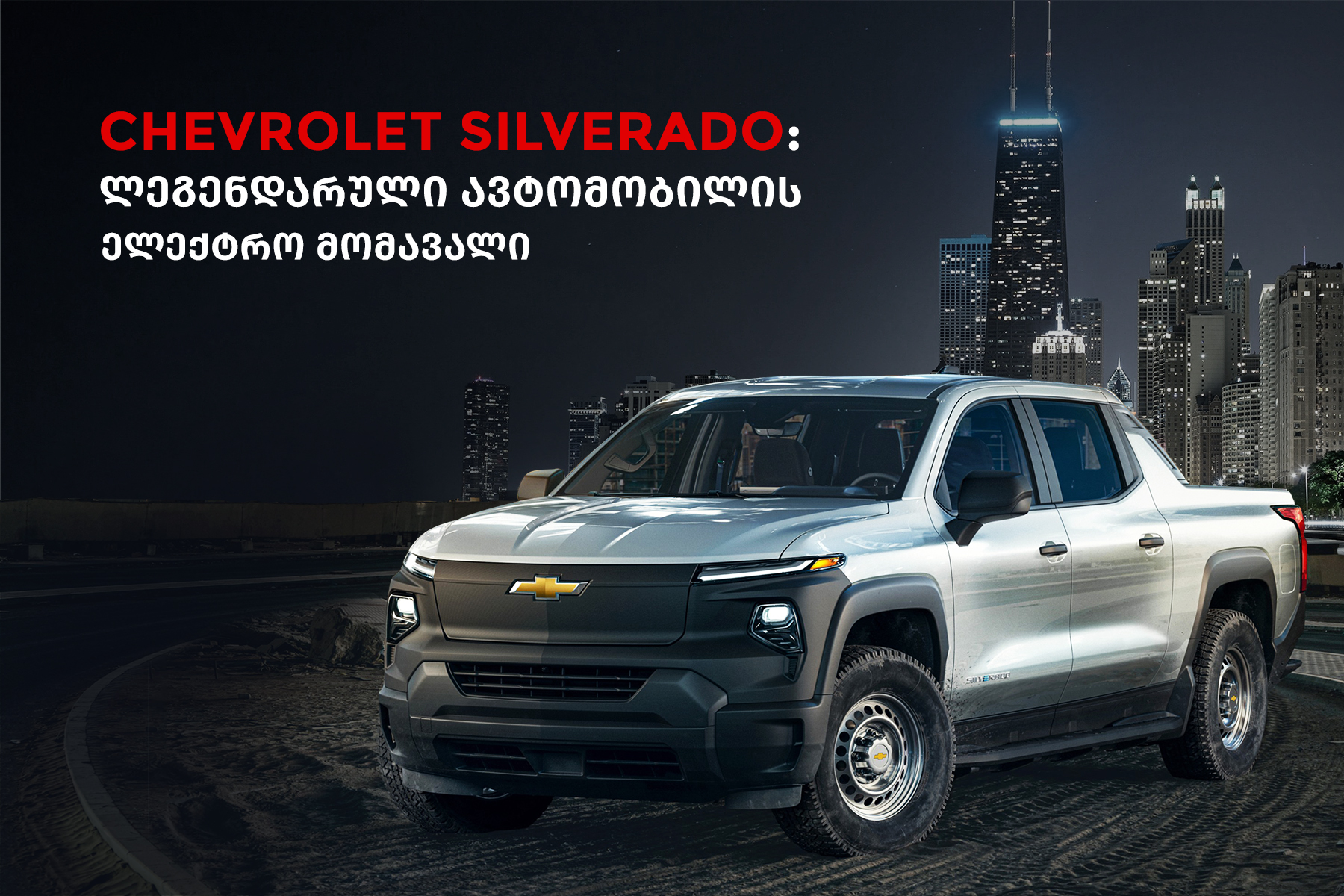
Nearly 40% of the U.S. full-size pickup market belonged to GM in 2025, according to GM investor materials, which helps explain why the Chevrolet Silverado name carries so much weight with truck buyers. The electric version raises a more difficult question: when one of America’s best-known work trucks goes electric, does it still make sense for real-world hauling, towing, long-distance driving, and import buyers outside the U.S.?
That question matters even more with a model like the Silverado EV, because the numbers look impressive at first glance. Chevrolet lists up to 493 miles of EPA-estimated range on certain 2026 Work Truck versions, along with serious towing capability and fast-charging support. Buyers still need more than headline figures. They need to know how the truck differs from the gasoline Silverado, where it performs well, where it falls short, and whether it makes practical sense once shipping, charging, and ownership costs enter the picture.
The Silverado Legacy: Why This Truck Matters
The Chevrolet Silverado has been one of the core vehicles behind the American pickup truck market for decades. It built its reputation in construction, logistics, farming, and heavy-duty commercial work. Many trucks spend years on job sites, towing equipment, carrying tools, and driving long distances under load. Silverado earned its status because it could handle that workload for hundreds of thousands of kilometers.
That reputation matters when discussing the electric Silverado. This isn’t just a new electric vehicle. It’s the electrification of one of the most important work trucks in the world. When a model with this kind of history moves to a new platform, the change affects not only private buyers but also businesses, contractors, and fleet operators.
The Silverado became a global symbol of American pickup trucks for one simple reason: durability combined with practicality. Owners use them as work vehicles during the week and long-distance vehicles on weekends. Few vehicle categories combine those roles as well as full-size pickup trucks.
Silverado’s Position in the U.S. Pickup Market
The U.S. pickup market is dominated by three models: Ford F-150, Chevrolet Silverado, and RAM 1500. They have led U.S. vehicle sales rankings for years. In many years, the Ford F-150 alone became the best-selling vehicle in the United States, not just the best-selling truck.
Silverado consistently ranks among the top three best-selling trucks in the U.S. That level of demand creates a large supply in the used market and at insurance auctions. High supply is one of the main reasons Silverado trucks appear frequently at U.S. auctions and later in export markets.
Pickup trucks dominate the U.S. market because they serve multiple roles:
- Work vehicle
- Family vehicle
- Towing vehicle
- Off-road vehicle
- Long-distance travel vehicle
Few vehicles can cover all those roles at once. That versatility explains why Silverado remains in constant demand both in the U.S. and internationally.
Why Pickup Trucks Are Popular Outside the U.S.
Imported pickup trucks became popular in countries like Georgia for practical reasons, not just appearance. They perform well on poor road conditions, in rural areas, and in construction environments.
Several factors explain their popularity:
| Reason | Why It Matters |
| Strong suspension | Handles damaged roads and heavy loads |
| Large engines | Designed for long lifespan under load |
| Parts availability | Many Silverado parts are widely available |
| Towing capacity | Can tow trailers, boats, or equipment |
| Price vs capability | Often cheaper than large SUVs with similar capability |
Many buyers compare a pickup truck to a large SUV and realize the truck often costs less while offering more capability. That calculation becomes even more important when importing vehicles from the U.S., where pickup trucks are common and resale supply is large.
Introducing the Chevrolet Silverado EV
Chevrolet didn’t turn the Silverado into electric cars by replacing the engine with a battery. GM developed the Silverado EV from the ground up on its dedicated Ultium EV architecture, which gave engineers far more freedom with packaging, weight distribution, storage, and interior layout. Chevrolet describes it as an all-electric truck built on a new platform rather than a converted gasoline model.
That distinction matters for buyers. A converted truck usually keeps many limits of the original design. The Silverado EV takes a different route, which explains why its body, proportions, cabin layout, and performance figures differ so much from the gas Silverado. The two subsections below explain the platform first, then the design changes buyers will notice most.
Built on the Ultium Platform
GM built the Silverado EV on its Ultium EV platform, the same broader electric architecture that supports several newer GM electric models. That platform was designed around a large battery pack integrated into the vehicle structure, rather than around an engine bay, transmission tunnel, and fuel system.
For buyers, that changes three major things: range, performance, and space. Chevrolet says the 2026 Silverado EV offers up to 478 miles of GM-estimated range in certain versions, along with up to 760 horsepower and 775 lb.-ft. of torque. Those figures come partly from the battery size and partly from the platform’s ability to support high-output electric motors.
An EV platform also changes how the truck drives. The battery sits low in the chassis, which lowers the center of gravity. That usually improves stability and helps control body movement better than many traditional full-size trucks. Electric power delivery also arrives immediately, without gear changes or engine rev build-up.
The platform also supports very fast charging. Chevrolet says Silverado EV models support DC fast charging up to 350 kW. That level matters more in a large truck than in a small EV, because bigger batteries need faster charging to stay practical.
Design Differences vs Gas Silverado
The Silverado EV may carry the Silverado name, but its structure differs sharply from the gasoline truck. A gas Silverado has to package a large engine, transmission, exhaust system, driveshaft components, and fuel tank. The electric version doesn’t need that same layout, so Chevrolet had much more freedom with the front end, cabin floor, and storage design.
One obvious result is the front trunk. Since there’s no conventional engine under the hood, the Silverado EV can offer a lockable eTrunk in the nose. That adds useful cargo space that a gasoline Silverado simply can’t provide.
The body shape also reflects different priorities. The Silverado EV uses smoother surfacing and more aerodynamic styling than the gas model. That choice isn’t only visual. Aerodynamics matter far more in an EV, especially at highway speeds, because drag has a direct effect on driving range.
Inside, the differences continue. The dedicated EV layout allows a more open cabin feel and supports a technology-heavy interior. Chevrolet highlights large digital displays, integrated towing technology, and a more modern control layout than the traditional Silverado cabin.
So, buyers shouldn’t view the Silverado EV as the gasoline truck with a battery swap. It’s a separate product with a different architecture, different proportions, and a different ownership experience. That foundation sets up the next question buyers care about most: how the Silverado EV performs in real use.
Silverado EV Specifications and Performance
Numbers matter, but context matters more. The Silverado EV posts headline figures that place it among the most capable electric trucks on sale, including up to 493 miles of EPA-estimated range on the 2026 8WT, up to 12,500 pounds of max towing, and up to 760 horsepower on consumer models with Wide Open Watts. Those figures look strong on paper, but buyers need to understand how they change in daily driving, towing, charging, and load-carrying use.
The subsections below break down the four specs that shape ownership most: range, towing, power, and charging. Each one affects how practical the truck feels once it leaves the brochure and starts doing real work.
Electric Range
Range is the Silverado EV’s biggest advantage. Chevrolet lists up to 493 miles of EPA-estimated range for the 2026 Silverado EV 8WT, while the 5WT is rated up to 424 miles. Consumer-facing pages for the broader 2026 lineup also list up to 478 miles, which shows that range depends heavily on trim and battery pack.
For buyers, that means one simple thing: “Silverado EV range” isn’t a single number. Work Truck versions, retail trims, wheel size, tire choice, and battery pack all change the result. A buyer comparing listings should always check the exact trim rather than relying on the highest advertised figure.
Real-world range also drops when conditions get harder. Towing adds the biggest penalty, but speed, cold weather, steep terrain, cargo weight, and aggressive acceleration also reduce distance. A truck rated near 400 or 500 miles in ideal conditions won’t deliver that same figure with a trailer behind it on the highway.
Towing Capacity and Payload
The Silverado EV offers serious towing numbers by EV standards. Chevrolet lists up to 12,500 pounds of max towing on some 2026 versions, while the 8WT is rated up to 10,500 pounds. Payload also varies by trim, reaching up to 1,800 pounds on the 5WT and 1,400 pounds on the 8WT.
That puts the truck in familiar territory for many pickup buyers. A gasoline Silverado 1500 can still make more sense for frequent long-distance towing, but the EV version covers a wide range of practical truck use, especially for shorter routes, site work, and buyers who tow within a predictable radius.
The main trade-off is range loss under load. Towing affects every electric truck more harshly than most gasoline trucks because aerodynamic drag rises fast, especially with tall trailers. Buyers planning to tow boats, equipment, or car haulers need to think in charging stops, not only in towing limits.
| Spec area | What the number tells you | What buyers should watch |
| Max towing | How much weight the truck can pull safely | Trim-specific rating |
| Payload | How much weight the truck can carry in bed and cabin | Cargo plus passengers |
| Real towing usability | How practical it feels with a trailer attached | Range drop and charger access |
Horsepower and Acceleration
The Silverado EV delivers power differently from a gasoline truck. Chevrolet lists up to 760 horsepower and up to 785 lb.-ft. of torque on the 2026 retail lineup with Wide Open Watts, while some work-focused versions list up to 510 horsepower and 580 lb.-ft. in Tow/Haul mode.
That immediate electric power changes how the truck feels from a stop. Chevrolet also claims a 0–60 mph time of about 4.5 seconds for certain 2026 Silverado EV versions, which is unusually quick for a full-size pickup. Gas trucks usually need engine revs and gear changes to reach peak force. An EV delivers most of that pull right away.
For daily use, that means easier merging, quicker response with cargo, and smoother low-speed control. For truck buyers, horsepower matters less than usable force, and the Silverado EV’s strongest point is how quickly it delivers that force.
Charging Time and Charging Types
Charging speed is the second major ownership question after range. The Silverado EV supports DC fast charging up to 300 kW on work-truck pages, while Chevrolet’s comparison material says certain versions can add up to 100 miles of range in 10 minutes with available 350 kW public fast charging capability.
That sounds fast, but the charging type makes a huge difference. Level 1 charging uses a basic household outlet and works best for emergency or very light use. Level 2 charging is the realistic home option for most owners. DC fast charging is what makes long-distance travel practical, especially for a large-battery truck.
In real ownership terms, daily charging at home is usually simple if the buyer has dedicated parking and a proper charger. Long trips require more planning because large battery packs still take time, even on powerful fast chargers. Buyers should think less about “full charge time” and more about how much range they can add during a useful stop.
So, the Silverado EV’s spec sheet is impressive, but the details matter. Range varies by trim, towing changes everything, and charging practicality depends on both infrastructure and driving habits. That leads directly to the next question: where an electric pickup offers a clear advantage over a gasoline truck, and where it doesn’t.
Advantages of an Electric Pickup Truck
The Silverado EV isn’t better for every buyer, but it does solve several problems better than a gasoline truck. Owners who drive predictable routes, charge at home or work, and want lower day-to-day operating costs will see the clearest benefit. The biggest gains come from ownership costs, power delivery, and cabin refinement.
The next three areas explain where an electric pickup truck can feel like a meaningful step forward rather than just a different powertrain.
Lower Running Costs
An electric pickup usually costs less to run over time because it has fewer service items. The U.S. Department of Energy notes that all-electric vehicles require less maintenance because they have fewer moving parts and fewer fluids to change. They also avoid routine oil changes, and regenerative braking can reduce brake wear.
Fuel cost is another major factor. Electricity often costs less than gasoline per mile, especially when charging happens at home during lower-rate hours. Savings vary by local energy prices, but the ownership logic stays the same: fewer routine service tasks and lower fueling costs can reduce long-term running expenses.
| Cost area | Gasoline pickup | Electric pickup |
| Energy source | Gasoline or diesel | Grid electricity |
| Oil changes | Required | Not required |
| Brake wear | Higher in normal driving | Often lower due to regenerative braking |
| Powertrain complexity | More mechanical components | Fewer routine service parts |
Instant Torque and Driving Experience
Torque is the force that gets a vehicle moving. In a gasoline truck, peak pulling force usually builds with engine speed and gear changes. In an electric truck, much of that force arrives the moment the driver presses the accelerator. Chevrolet describes its EV performance as delivering nearly instant torque and acceleration.
That immediate response helps in several situations. It makes low-speed movement feel smoother in traffic. It also helps when merging, climbing, or moving a loaded truck from a standstill. For towing, that instant pull can make the truck feel more controlled at low speeds, especially when starting on an incline or maneuvering a trailer into position.
Quiet Operation and Comfort
Electric trucks also change the driving experience in a less obvious way: they remove much of the noise and vibration buyers accept in large pickups. Without engine revs, exhaust note, and gear shifts, the cabin usually feels calmer in daily driving. Chevrolet highlights a smooth, quiet ride as one of the core ownership advantages of its EV lineup.
That matters most for buyers who use a truck as both a work vehicle and a family vehicle. Less noise can make highway trips less tiring. Smoother power delivery can also make stop-and-go driving feel more refined than in many traditional full-size pickups. For some owners, that comfort difference will matter as much as the savings.
Silverado EV vs Ford F-150 Lightning: Electric Truck Comparison
The Silverado EV and Ford F-150 Lightning target the same buyer, but they don’t solve the same problem equally well. Chevrolet leans harder into maximum range and higher tow ratings, while Ford offers a more familiar electric version of an existing truck nameplate. That makes the comparison useful for buyers who care about work use, road-trip practicality, and purchase budget.
The four areas below matter most in a real purchase decision: range, towing, price, and buyer fit. Looking at them side by side makes the trade-offs much clearer.
Range Comparison
Chevrolet currently holds the range advantage. The 2026 Silverado EV is listed with up to 478 miles of GM-estimated range on Chevrolet’s retail page, and GM comparison material lists up to 424 miles for the 5WT work truck. Ford’s 2025 F-150 Lightning commonly reaches 320 miles with the extended-range battery on retail inventory pages.
That gap matters most for buyers who drive long highway routes or work far from chargers. It also gives Silverado EV owners a larger buffer when weather, terrain, or heavy cargo reduce actual distance. Ford partly offsets that with its Intelligent Range system, which updates estimates based on conditions, including towing.
Towing Comparison
The Silverado EV also leads on headline towing numbers. Chevrolet lists up to 12,500 pounds of max towing on certain 2026 versions. Ford’s F-150 Lightning tops out at 10,000 pounds with the extended-range battery and Max Trailer Tow Package.
That doesn’t automatically make Chevrolet the better towing truck for every buyer. Both models lose substantial range when towing, so charger access becomes part of the towing calculation. Ford directly notes that towing affects displayed range estimates. Chevrolet also positions DC fast charging as a major advantage for its larger truck platform.
| Comparison point | Chevrolet Silverado EV | Ford F-150 Lightning |
|---|---|---|
| Max listed range | Up to 478 miles | Commonly up to 320 miles |
| Max towing | Up to 12,500 lbs | Up to 10,000 lbs |
| DC fast charging | Up to 300 kW listed in GM comparison material | Up to 150 kW listed in GM comparison material |
| Starting price | From about $55,895 | From about $54,780 |
Data varies by trim and battery. Buyers should always verify the exact configuration.
Price Comparison
The price is much closer than the range. Chevrolet lists the 2026 Silverado EV starting at $55,895 on its consumer site, while Ford lists the 2025 F-150 Lightning starting at $54,780. On entry price alone, the two trucks sit in nearly the same bracket.
The bigger difference appears when you match capability. A buyer chasing maximum range or stronger towing usually moves higher in the lineup. That tends to raise the transaction price on both trucks. So, the lowest advertised MSRP matters less than the cost of the trim that actually fits the job.
Which One Is Better for Different Buyers
The Silverado EV makes more sense for buyers who prioritize range, stronger max towing, and a more future-oriented truck platform. It suits long-distance drivers better, at least on paper, and it offers more breathing room before the next charge stop.
The F-150 Lightning fits buyers who want a more familiar transition into an electric truck. Ford kept the F-150 identity closer to the traditional pickup formula, which may appeal to owners who want simpler adaptation and a known nameplate.
In practical terms, the choice looks like this:
- Pick Silverado EV if range matters most, or if the truck will cover longer routes.
- Pick F-150 Lightning if familiarity matters more, or if daily use is shorter and predictable.
- Compare exact trims before deciding, since battery size changes both cost and capability.
For Lion Auto’s audience, one point matters especially: neither truck should be judged by badge alone. Import cars from USA to Georgia buyers need to compare trim, battery, towing needs, and charging access before deciding which electric pickup makes more sense once it reaches Georgia.
Is the Silverado EV a Good Choice for Import Buyers?
For import buyers, the Silverado EV can make sense, but only under the right conditions. The truck offers strong range, strong towing figures, and modern EV hardware, yet it also brings higher transport costs, battery-related service questions, and a heavier dependence on charging access than a gasoline pickup. That means the decision should start with use case, not with the badge.
For Lion Auto’s audience, two questions matter most. First, how available is the Silverado EV at U.S. auctions today? Second, what practical issues come with importing a large electric pickup into Georgia? The two subsections below address both.
Availability at U.S. Auctions
Silverado EVs have already started appearing at U.S. auctions, but supply still looks limited compared with traditional Silverado models. IAA currently shows individual auction listings for 2024 and 2025 Silverado EV Work Truck, LT, and RST units, which confirms that early examples are already entering the secondary market.
Still, buyers shouldn’t expect the same auction volume they would see with gasoline Silverados. The electric truck remains far newer, and newer vehicles usually need time to build a large used and salvage supply. That supply typically grows as fleet units age, lease returns increase, and insurance-loss volumes rise over time. Current listings show availability, but not deep market saturation yet. That means trim choice, condition, and pricing can vary sharply from one listing to the next.
A buyer also needs to separate retail excitement from auction reality. Chevrolet is still actively expanding the Silverado EV line, including the 2026 lineup, which means many trucks remain in their early ownership cycle rather than in the auction pipeline. As a result, buyers searching U.S. auctions may find opportunities, but they won’t get the same broad selection available for long-established gasoline pickups.
Shipping and Charging Considerations
Importing an electric pickup requires more planning than importing a regular full-size truck. The Silverado EV is large, heavy, and battery-dependent. Buyers need to think beyond purchase price and ask whether local charging, service support, and transport economics make sense for their ownership pattern.
Charging access should be checked before bidding, not after arrival. A Silverado EV can support very fast DC charging, but that matters only if the owner has realistic access to compatible chargers. UNECE materials on regional EV rollout note that charging infrastructure remains uneven in many markets, and limited charger distribution remains a real constraint outside the most developed networks. For a buyer in Georgia, home charging access may matter even more than public charging density.
Service readiness matters too. A gasoline Silverado can often be maintained by a wide range of repair shops. A Silverado EV may require more specialized diagnostic capability, battery-related expertise, and parts planning. That doesn’t make it a bad import, but it does mean buyers should confirm where high-voltage work, software-related issues, and collision repair can be handled before importing the truck. Chevrolet’s own materials position the Silverado EV as a high-tech, fast-charging, battery-heavy platform rather than a simple drivetrain swap.
Transport cost is the final filter. The Silverado EV’s size and mass can make shipping less forgiving than with smaller EVs or mid-size SUVs. A buyer should compare the landed cost against a gasoline Silverado, a Ford F-150 Lightning, and even a large SUV before committing. In some cases, the Silverado EV will make strong sense for a buyer with stable charging access and mostly local or regional use. For a buyer who drives long rural routes or tows often, a traditional pickup may still be the safer import choice.
| Import factor | Why it matters for Silverado EV buyers |
| Auction supply | Still limited versus gas Silverado |
| Charging access | Critical for daily usability |
| Service support | High-voltage expertise may be limited |
| Shipping economics | Large size can raise total landed cost |
| Use case | Best fit for predictable routes and regular charging |
So, the Silverado EV can be a good import choice, but only for buyers whose local setup matches the truck’s needs. Strong specs alone aren’t enough. The smarter question is whether the owner can support the truck properly once it reaches Georgia.
The Future of Electric Pickup Trucks
Electric pickups are still early in their lifecycle, but the direction is already clear. More manufacturers are entering the segment, charging is getting faster, and battery development keeps improving the parts buyers care about most: range, durability, and ownership cost. The International Energy Agency expects global public fast-charging capacity to grow more than tenfold by 2030 in its stated policy scenario, which matters directly for large vehicles such as electric trucks.
That broader shift matters for the Silverado EV. It won’t compete in a small niche for long. It will sit in a growing field of electric pickups, each aiming at a slightly different buyer. The next two subsections explain where that competition is headed and why the underlying technology should look stronger every year.
Upcoming Electric Trucks
The Silverado EV won’t be alone for long. GMC already sells the Sierra EV as a closely related premium electric pickup, giving GM two entries in the segment. Ram also lists the Ram 1500 REV on its official site with projected availability in 2026, while Scout Motors has revealed the Terra as a new electric pickup aimed at rugged, body-on-frame buyers. Tesla’s Cybertruck is already on sale, which means the market now includes very different interpretations of what an electric truck should be.
That growing competition should help buyers in two ways. First, it should create more choice in size, design, price, and intended use. Second, it should put pressure on manufacturers to improve towing performance, charging speed, cabin technology, and software support faster than they would in a one- or two-player market.
| Model | Current status | Position in the segment |
| Chevrolet Silverado EV | On sale | Long-range full-size work and consumer truck |
| GMC Sierra EV | On sale | More premium GM alternative |
| Ford F-150 Lightning | On sale | Familiar electric version of America’s best-known truck line |
| Tesla Cybertruck | On sale | High-tech, unconventional utility truck |
| Ram 1500 REV | Projected for 2026 | Ram’s upcoming electric entry |
| Scout Terra | Revealed | Rugged new entrant with traditional truck cues |
The result should be a more mature truck market over the next few years. Buyers won’t have to choose between only one or two electric pickups. They’ll be able to match the vehicle more closely to how they actually drive, tow, and charge.
How EV Technology Is Improving Every Year
Battery technology keeps moving in three useful directions: better energy density, faster charging, and lower cost. The U.S. Department of Energy continues to frame its battery goals around reducing pack cost below $100 per kWh, ultimately toward $80 per kWh, while also targeting 15-minute-or-less charging and longer driving range. Those targets matter because they address the main complaints buyers still have about EV trucks.
The IEA also notes ongoing battery development beyond standard lithium-ion improvements. Its 2025 battery outlook highlights newer sodium-ion development with better energy density and faster charging than earlier generations. That doesn’t mean every pickup will suddenly switch battery chemistry, but it does show how quickly battery research is expanding beyond the older baseline.
Charging technology is improving at the same time. DOE funding in 2025 included heavy-duty charging projects with multi-megawatt capability, which shows where infrastructure is heading for larger electric vehicles. Passenger pickups won’t need that level of power, but the same investment trend supports faster, more practical charging networks over time.
For buyers, the practical takeaway is simple. Future electric pickups should charge faster, travel farther, and become easier to justify financially than today’s first-generation models. That doesn’t mean every current truck will become outdated overnight. It means the category is still improving quickly, and the Silverado EV is part of a segment that should look much stronger by the end of this decade.